
Last updated November 21, 2026
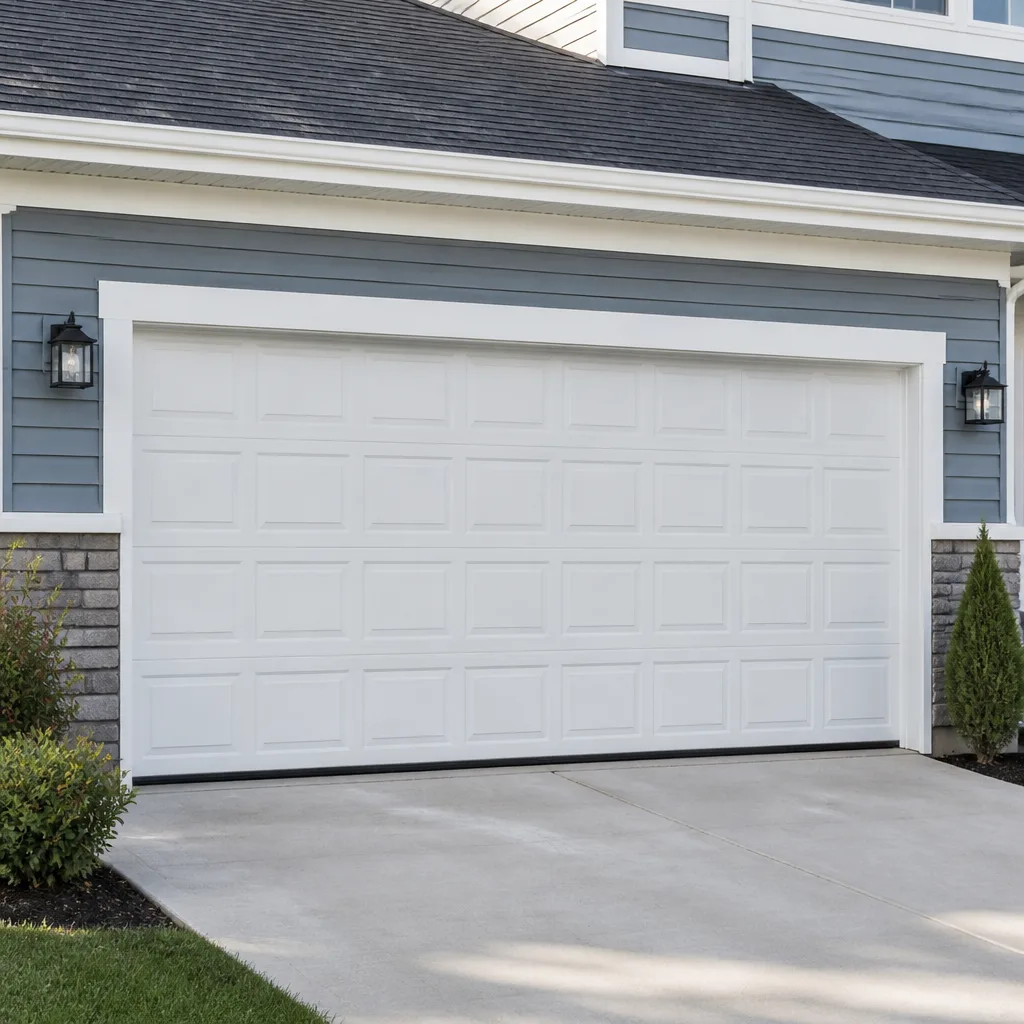 Raised-panel steel
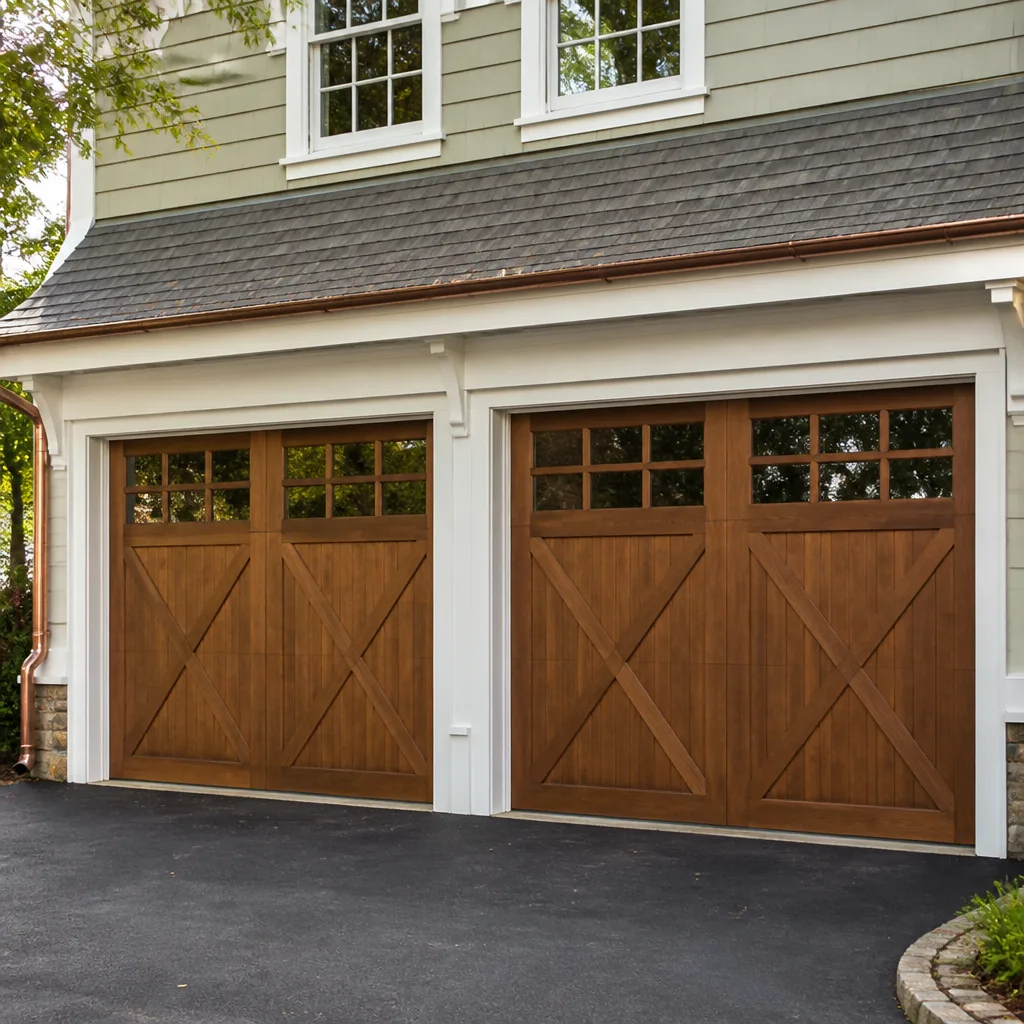 Carriage house
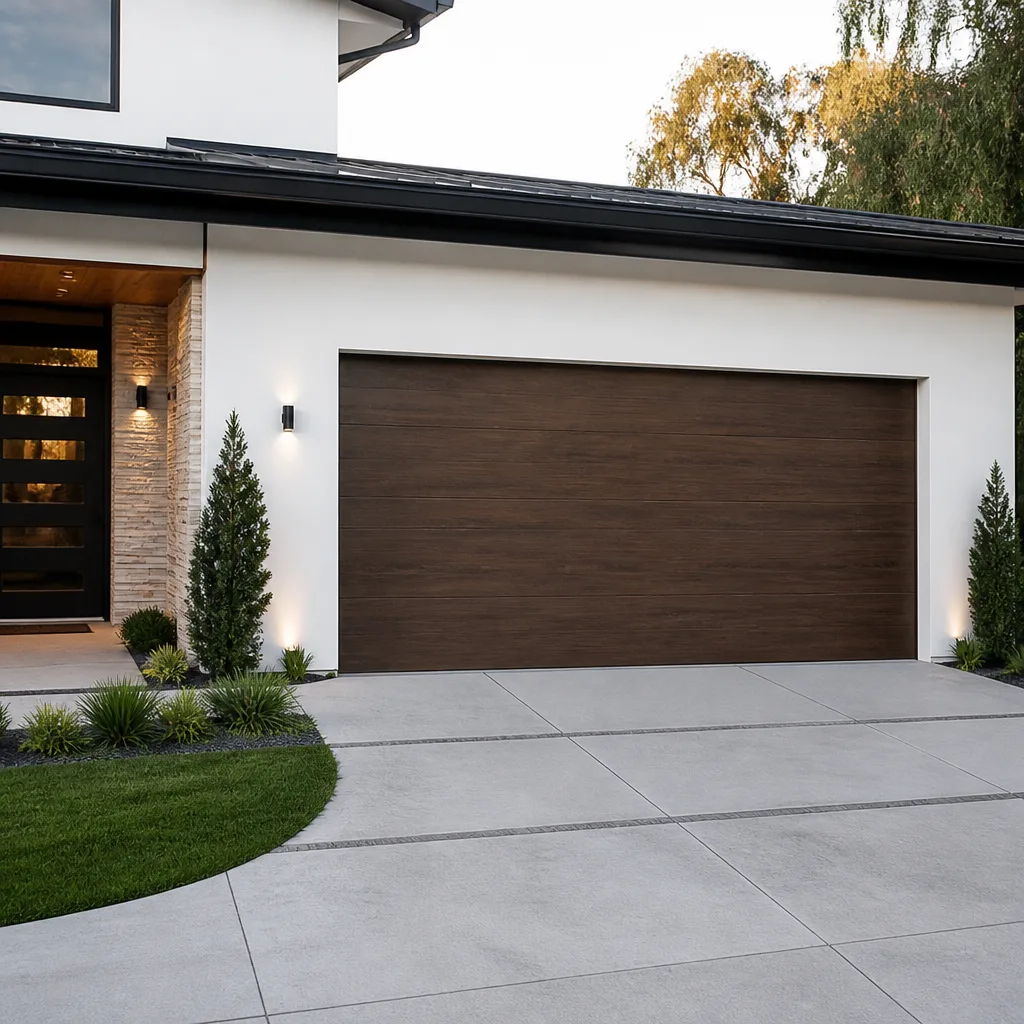 Modern flush
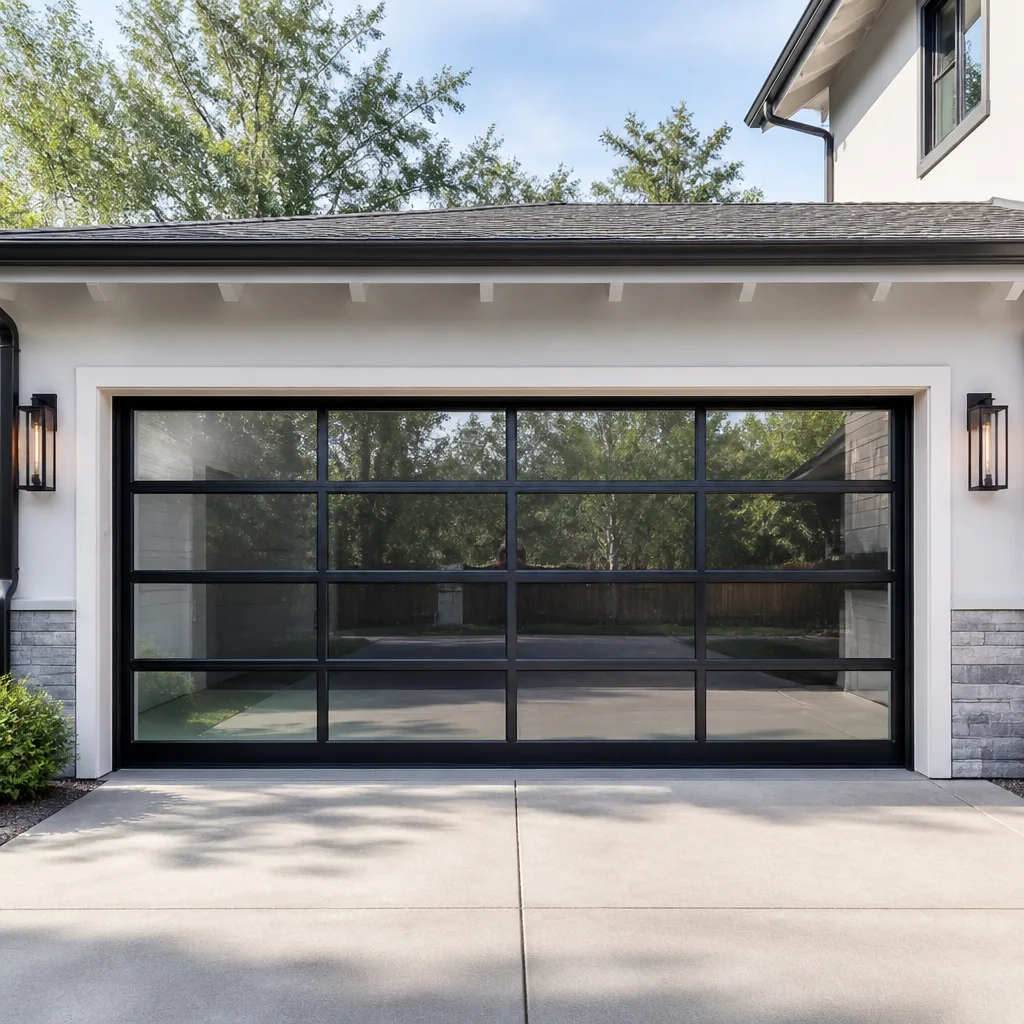 Full-view glass
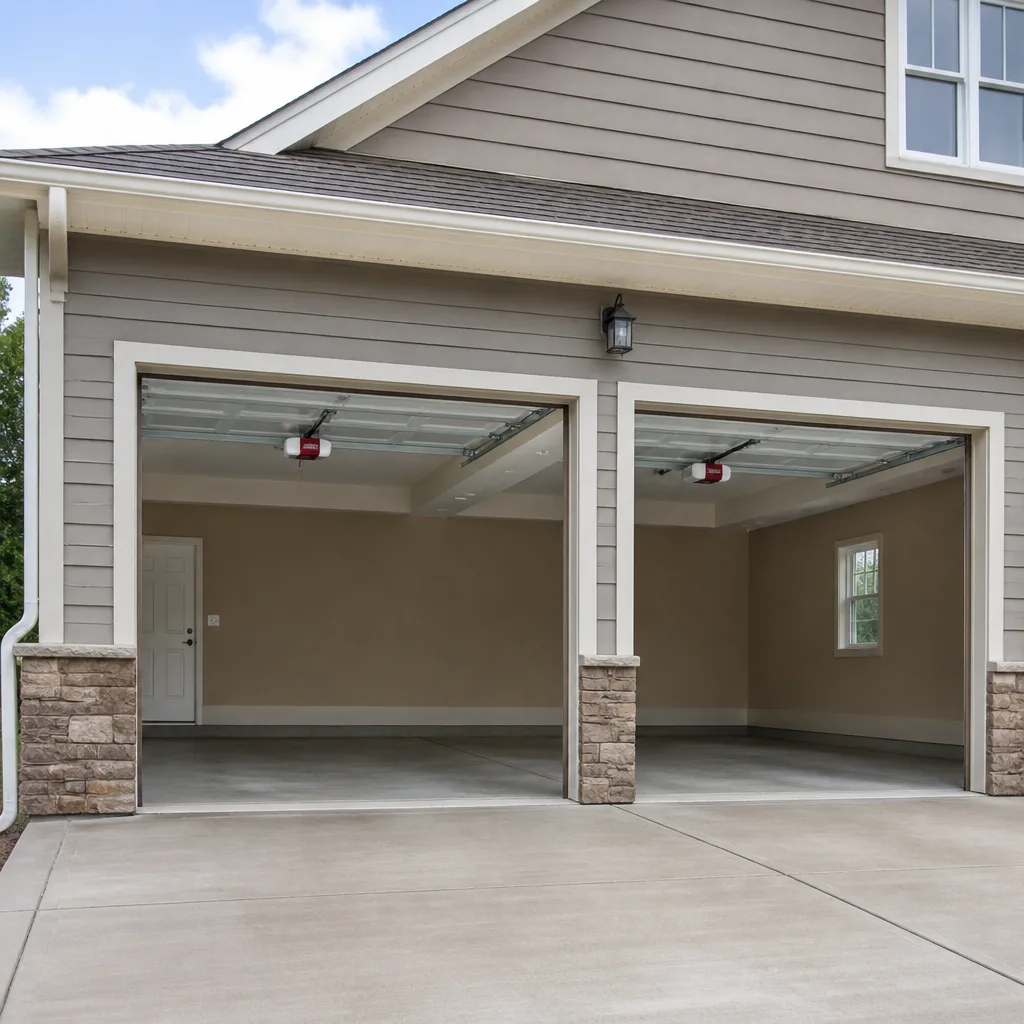 LiftMaster openers
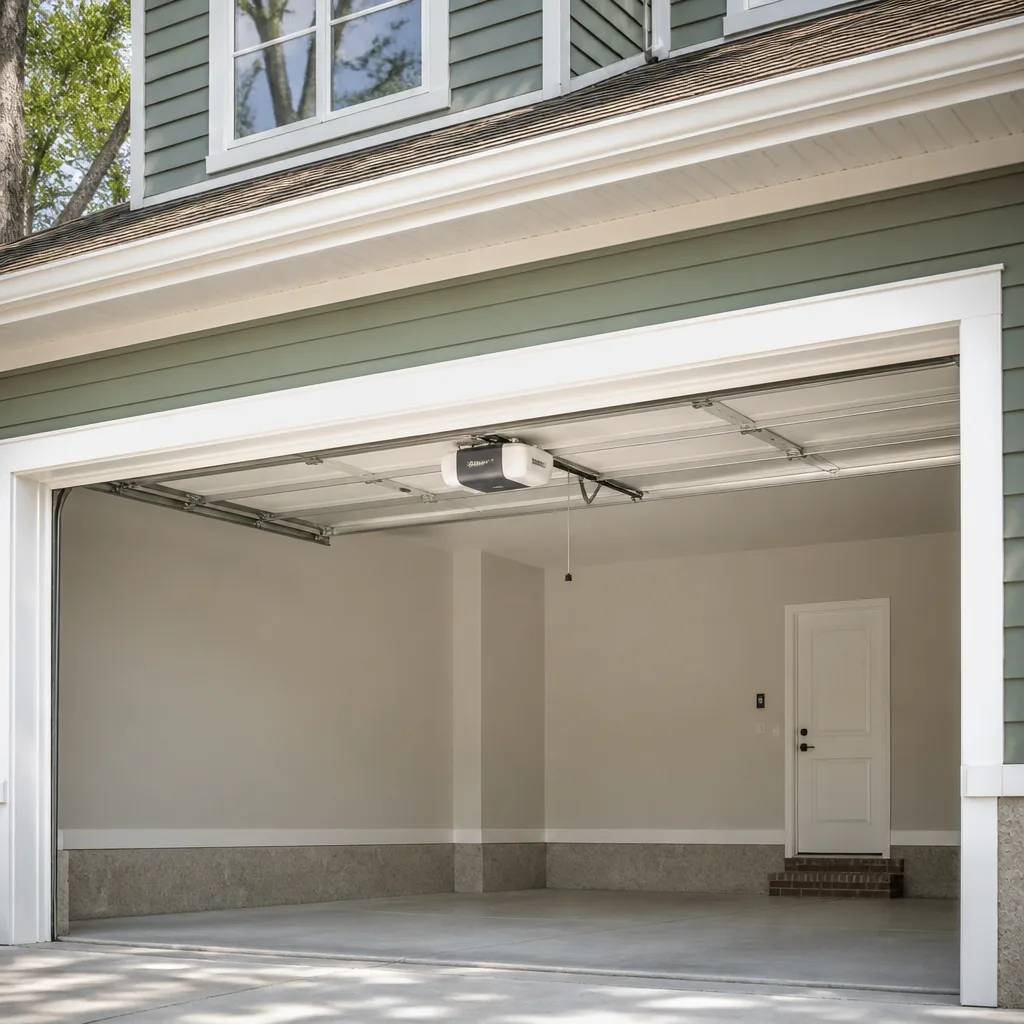 Chamberlain openers
Full 25-point door and opener safety check with every visit - springs, cables, rollers, tracks, and your LiftMaster or Chamberlain opener included
You get a price before we start. It does not change when the pro arrives.
Get your free estimateGarage Door Warning Signs: A Mott Haven Homeowner’s Reference Guide
Most garage doors don’t fail without notice. They warn you first, usually for weeks, and the warning shows up as sound, movement, or a small change in how the door meets the floor. Here’s the part most homeowners get wrong: a door that hesitates for two seconds before it moves isn’t being slow. It’s telling you the opener’s force limit is compensating for a mechanical problem, and in most cases that door is two to four weeks from stopping entirely. This guide teaches you to read those signals in your specific door type, so you can tell a minor adjustment from an imminent spring failure. We’ll walk through sound, movement, rust patterns, bottom-seal gaps, and cable fraying, all in the context of Mott Haven’s older housing stock and Bronx humidity.
Quick Answer
In Mott Haven, NY, the five garage door warning signs worth acting on before anything breaks are: the door hesitating or reversing before it closes, a loud snap followed by the door not moving, a visible gap at the bottom seal, a door that lifts easily by hand but struggles on the opener, and rust bleeding along a torsion spring. Any of the first two means stop using the door and call a professional. The rest mean book an inspection before the small problem becomes a spring, cable, or opener replacement.
Styles & brands we work with
- Raised-panel steel
- Carriage house
- Modern flush
- Full-view glass
- LiftMaster openers
- Chamberlain openers
Table of Contents
- Reading the Sound: Opener Strain vs. Spring Fatigue
- The Rust Pattern on Torsion Springs That Means Replace Now
- What an Uneven Bottom-Seal Gap Reveals
- Fine by Hand, Struggling on the Opener? That’s a Force-Setting Red Flag
- Cable Fraying: Cosmetic vs. Serious vs. Same-Day
- A Monthly Two-Minute Check for Mott Haven Doors
- Why Brand Matters When Something Sounds Wrong
- When to Call a Professional
Reading the Sound: Opener Strain vs. Spring Fatigue
Sound is the fastest way to sort an electrical problem from a mechanical one, and it takes about ten seconds of listening. Stand in the garage, run the door, and pay attention to when the noise happens. Noise during the opener’s motor run, before the door starts moving, points at the opener. Noise during the door’s travel, before the motor ever engages, points at the mechanical system: springs, cables, rollers, or hinges.
Here’s the split, in order:
- Grinding or humming that stops without movement. The motor is trying to run but the door isn’t traveling. That’s opener strain: a stripped drive gear, a binding rail, or a force limit cutting the run short. It’s electrical and mechanical at the opener itself.
- A rhythmic squeal or screech that follows the door up and down. The rollers or hinges are dry or worn. This is the mechanical side, and it’s the most fixable warning on the list.
- A single loud snap, then silence, then the door won’t lift. A torsion spring has broken. The door stays down. Stop here – don’t run the opener again.
- Popping or banging at the start of each lift. A stretched spring is loading unevenly. That’s spring fatigue, and it’s heading toward failure.
Mott Haven garages sit in a lot of older, tight structures where the door cycles in a confined space with hard surfaces on three sides. Echo makes an opener problem sound like a door problem, so quiet the space by opening the service door and listening again. If the noise is still there but the source is unclear, we’ve found the safest next step is a diagnostic from a technician rather than a second round of guessing. Our technicians have up to 13 years of experience reading exactly this kind of ambiguity.
The Rust Pattern on Torsion Springs That Means Replace Now
Bronx humidity is brutal on springs, and most of the rust you’ll see is harmless. Surface corrosion – a light orange bloom across the whole coil – is normal here. The pattern that matters is different: rust concentrated in a single line where the coil meets the shaft, or a visible dark line of rust where a coil has developed a crack. That’s where a spring is about to give.
Why does the pattern matter? A torsion spring is a coil of steel under constant tension. When the wire develops a fatigue crack, moisture gets into the crack and rusts from the inside out. The visible signature is a thin, dark, rust-colored line that looks like a pencil stroke, often near one end of the coil or at the center. Light, even oxidation across the wire is weather. A single rust line is a warning.
What to do with this:
- Light orange film on the coil, no line, no dark spots: note it, keep monitoring. It’s the Bronx climate, not a failure.
- A visible dark rust line or a hairline crack: book a spring inspection. Don’t wait for the snap.
- Rust plus a door that’s harder to lift by hand than it used to be: the spring has lost tension. It’s not holding the door’s weight anymore, and the opener is carrying what the spring used to.
- Rust plus the door stuck open: that’s a same-day call. A door stuck open at night in Mott Haven is a door anyone can walk into, and it also can’t be safely left suspended.
We need to be clear about one thing on springs, because this is the warning sign people most often try to handle alone: torsion springs store enough energy to break bones or kill. A spring under load is not a home repair. Full stop. Garage door repair on a failed spring is a trained-professional job, and the technicians who touch that spring need the right rods and the right knowledge of the door’s balance. Don’t attempt it. Call a technician.
What an Uneven Bottom-Seal Gap Reveals
An uneven gap along the bottom seal tells you two things depending on the shape of the gap. A gap that’s wider on one side than the other means the door’s track is out of alignment, not the foundation. A gap that’s widest in the middle and tapers at both edges usually means the door panels or the bottom section are bowed – often from impact, sometimes from weight the door wasn’t designed to carry.
Here’s the distinction, because plenty of homeowners assume the worst:
- One side low, one side high: the vertical track on the low side has moved or worn. Track alignment. This is adjustable and usually resolves without replacing anything.
- Center gap with even corners: the door’s structure is compromised. That’s panel or hinge damage, not settling.
- Gap that closes on warm days and opens in the cold: thermal expansion and a stiff seal. Very common in Mott Haven’s older detached garages, where the slab and the door frame were poured at the same time and the seal has long since hardened.
- A gap at only one corner, plus a door that seems to rack (rock side to side) as it lifts: the old framing around the opening has shifted or softened. This is the case that actually points at foundation movement, and it usually shows up in the older Mott Haven structures where a garage was added to a property long after the house was built.
If the gap is letting water in during Bronx rain, that’s more than an annoyance. Water on the track causes rust on the rollers, and water on the floor slab under the door causes the seal to rot from below. A door that closes on a level, uniform seal also keeps heat in during the cold months and keeps the garage noticeably quieter. If you can’t tell which of these patterns you’re looking at, that’s the moment to get eyes on it.
Fine by Hand, Struggling on the Opener? That’s a Force-Setting Red Flag
A door you can lift by hand with one finger but that the opener can barely move is not an opener problem. That is the single most misinterpreted warning sign we see. The opener is designed to supplement a balanced door, not muscle an unbalanced one. If the door lifts fine by hand, the opener is underperforming a door that shouldn’t be underperforming, and the cause is almost always force-limit settings that have drifted upward over the years, masking a balance problem underneath.
Here’s the logic, step by step:
- Disconnect the door from the opener at the manual release, with the door fully closed. (This is a safe check, not a repair.)
- Lift the door. It should come up smoothly and stay where you leave it, roughly halfway.
- If it lifts easily and stays put, the door is balanced. The opener is the problem, or its force limits are set higher than the door needs.
- If it’s hard to lift or wants to slam down, the door is unbalanced. The spring has lost tension. That’s a mechanical fix, not an opener setting.
- If the opener still reverses or stops, even on a balanced door, the force limit is compensating for what the opener thinks is an obstruction. Force limits need to come down, and the underlying mechanical issue needs a diagnostic.
Repeated force-limit adjustments are the wrong road. Every time you raise the limit, the opener runs harder against the door’s resistance, and the drive gear, the rail, and the motor all wear faster. That’s how a year of small adjustments turns into a full garage door opener repair, and the door itself rarely gets fixed along the way.
Cable Fraying: Cosmetic vs. Serious vs. Same-Day
Garage door cables fail differently from springs. A spring fails suddenly with a snap. A cable warns you for a while, and the warning is visible. What you’re looking for is fraying, separation, kinking, or a cable that’s starting to look like a frayed rope end.
Sort it into three tiers:
- Cosmetic: light surface corrosion on the cable coating, no fraying, no separation. Note it, keep the cable clean and dry, and have it checked at the next service visit.
- Serious: one or two visible wire strands separated from the bundle, or the cable looking slightly flattened where it runs over a drum. The cable has lost some of its strength safety margin. Book a repair within the week and avoid running the door more than absolutely necessary.
- Same-day: a cable that has “birdcaged” – strands fanned out like a frayed rope end – or a cable visibly detached from its drum. A cable in this state is a fall risk, and the door must not be operated. This is garage door repair Mott Haven at its most urgent.
Cables and springs work together. A weak spring puts extra tension on the cables, and a frayed cable can unbalance the door enough to misload the spring. When one goes, we recommend having the other inspected at the same time. That’s not upselling; it’s how you avoid two failure points in three months.
One note on Mott Haven’s older stock: garage doors in this area see a lot of cycling. If a household parks two cars and uses the door as the main entry, a dozen open-close cycles a day is normal. That puts more load cycles on the cables than the door was originally built for, so cables usually wear faster here than in a suburban garage. A quick visual check every month goes a long way.
A Monthly Two-Minute Check for Mott Haven Doors
Set a reminder once a month. Run through the following, in order, and you’ll catch nearly all of the failures before they happen.
- Listen. Run the door once. Does the motor run before the door moves? Is there a squeal, a pop, or a grinding sound? Note any change from last month.
- Watch the door travel. Does it hesitate? Does it stop and reverse? Does it drop faster than it used to on the last foot of the close?
- Look at the springs. Any dark rust line, crack, or coil separation? Any springs that look visibly stretched compared to how they looked a month ago?
- Look at the cables. Any fraying, fanned ends, or slack cable on one side of the door?
- Check the gap at the bottom seal. Does it close fully and evenly? Any daylight visible from inside when the door is down?
- Balance test. Release the opener, lift the door halfway, let go. It should hold. If it won’t, the spring is losing tension.
- Check the safety reverse. With the door down, put a 2×4 flat on the floor under the door’s path and close the door. It should reverse. If it doesn’t, stop using the opener and get it serviced.
If any step shows a new change, that’s the moment to book a diagnostic. Not a big deal for a single squeal. A big deal for a balance failure, a cable with a fanned end, or a spring with a rust line. The whole point of a monthly check is that most problems give you a week or two of grace once you spot them.
Why Brand Matters When Something Sounds Wrong
The warning signs are universal, but what they mean depends on the door and opener you have. A Chamberlain opener that sounds like it’s straining has different likely causes than a Genie unit making the same sound, and a Clopay panel door with a bottom gap has different diagnosis steps than an Amarr door with the same gap. That’s why brand-aware diagnosis beats a generic checklist, and it’s why we service the eight major brands that cover nearly every door in Mott Haven: LiftMaster, Chamberlain, Genie, Clopay, Amarr, Wayne Dalton, Craftsman, and Raynor.
Here’s what brand-specificity actually buys you:
- Right diagnostic path, first time. Knowing the exact model family means we know which force-limit settings to check, which fault codes matter, and which mechanical parts are the likely culprit.
- No voided warranties. Service on a door still under a manufacturer warranty has to follow that manufacturer’s requirements. A generalist who’s never worked on the brand can accidentally do work that voids coverage.
- Right parts. A Clopay spring replacement uses different parts than an Amarr of similar size. Ordering the wrong part isn’t a minor delay when the door is stuck open.
If you’re not sure what brand you have, look at the inside of the door panel and the opener housing. Both should be labeled. Once you know them, any call you make goes better. And if the door can’t be repaired cost-effectively, garage door installation on a replacement door is a straightforward path; we handle the measurement and the install on the same call, so no second company is involved.
When to Call a Professional
Call a professional when the door won’t move, when the opener moves but the door doesn’t, when a spring has snapped, when a cable shows fanned ends, or when the door reverses on its own during a normal close. Call when a door you can lift by hand still struggles on the opener, and call when a bottom-seal gap is letting water in. These are all cases where the fix touches a component under tension – spring, cable, or the opener’s drive system – and the risk of doing it wrong outweighs any savings. Two warnings we’d add for Mott Haven specifically: don’t ignore a door that’s hard to lift after the first cold snap of the year, and don’t trust a door that’s been sitting partially open through a Bronx rain. Both point at the same mechanical issues, and both get worse with use.
Garage Door Repair Mott Haven offers free estimates in Mott Haven. Call (877) 931-8297. We answer 24/7. Fast dispatch from 7am to 7pm, Sunday through Friday. The price is quoted and agreed before any work begins, so there are no surprises once we’re on site.
See the difference
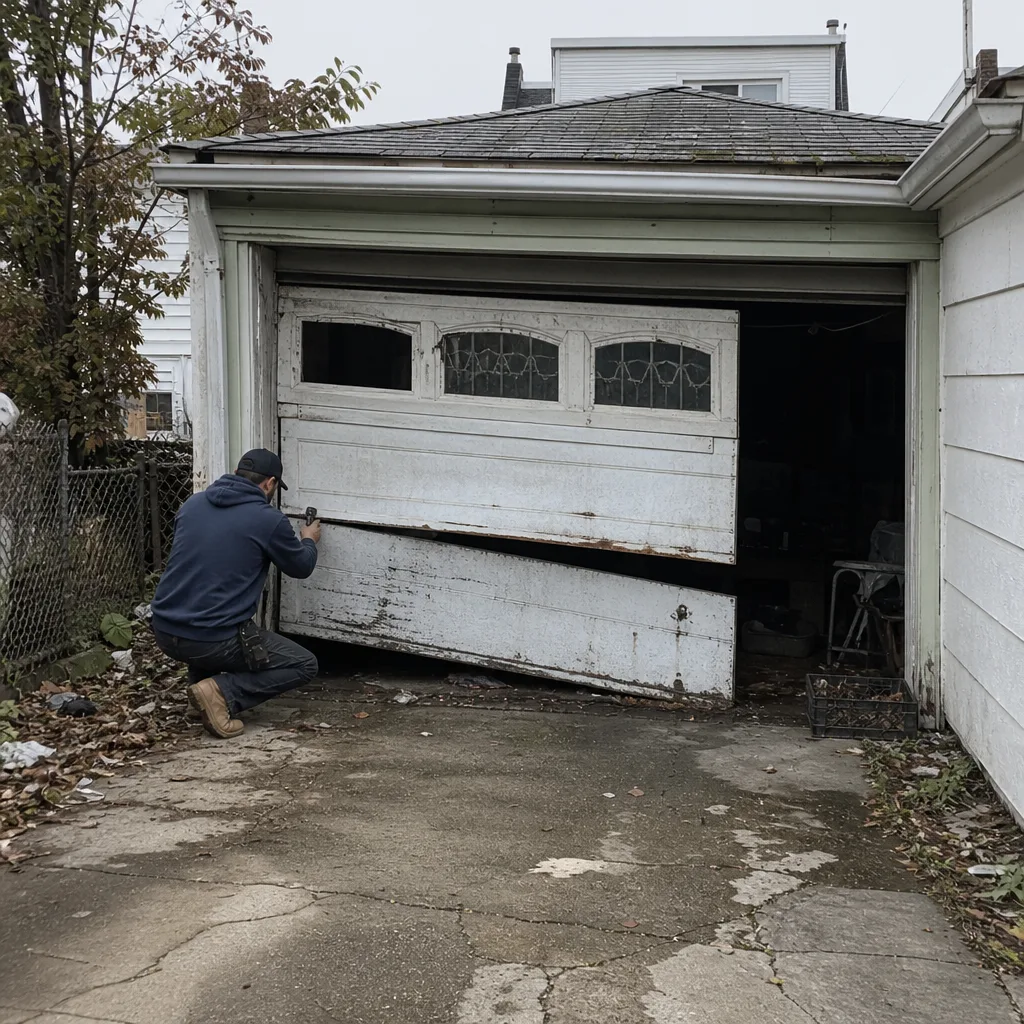 Before
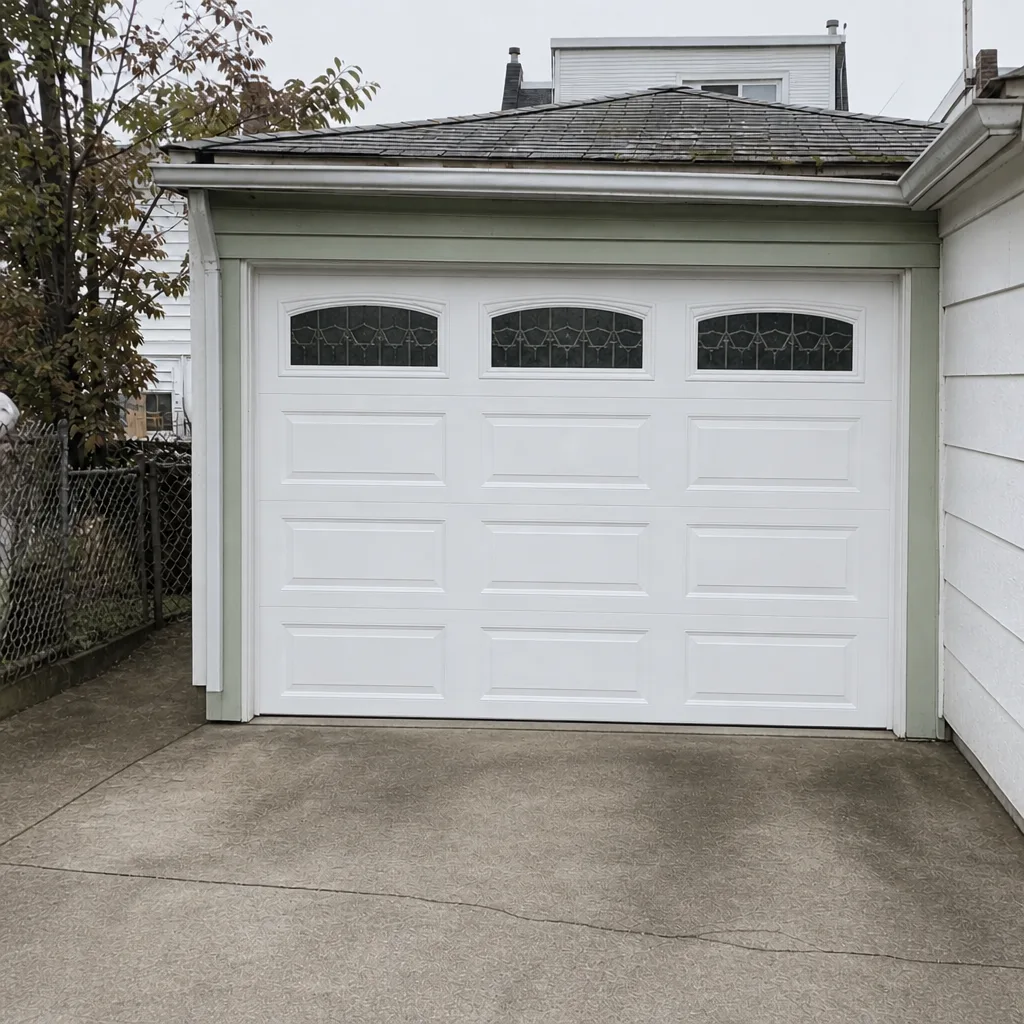 After
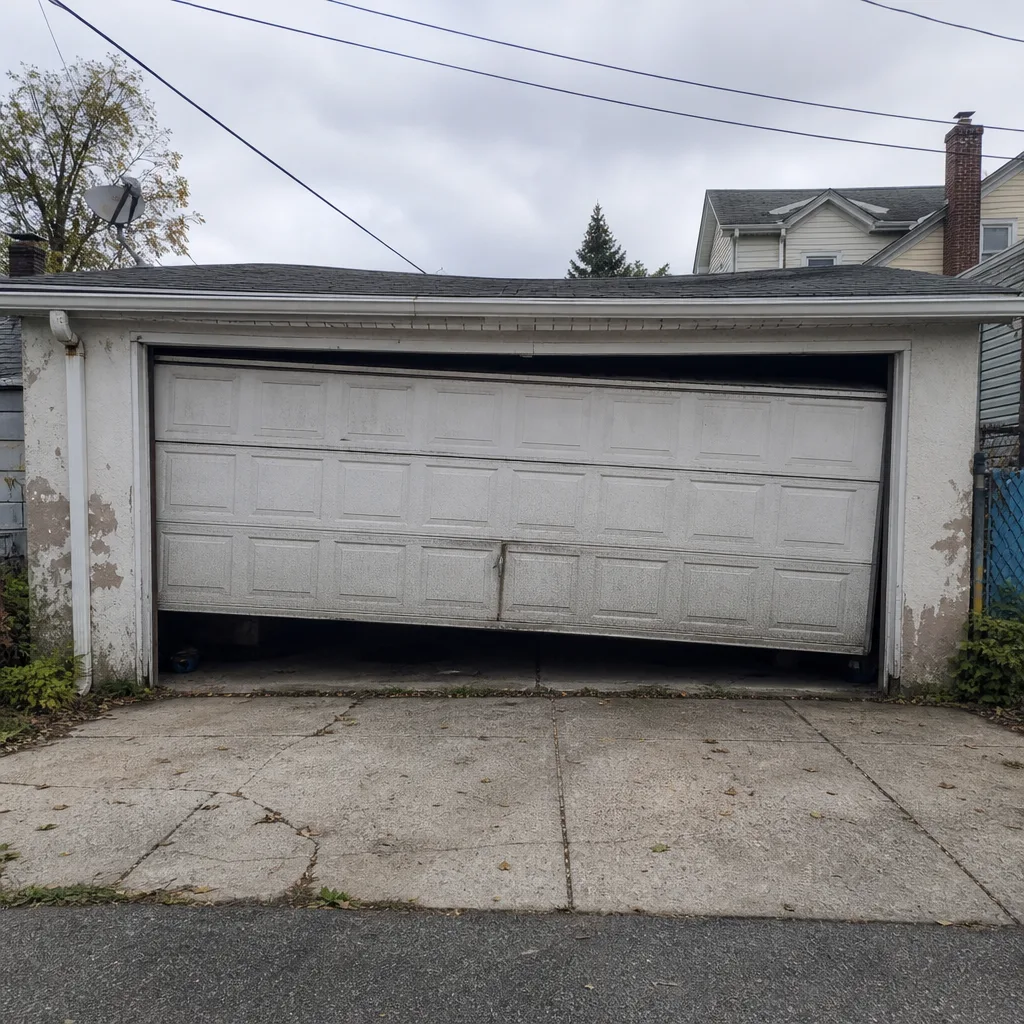 Before
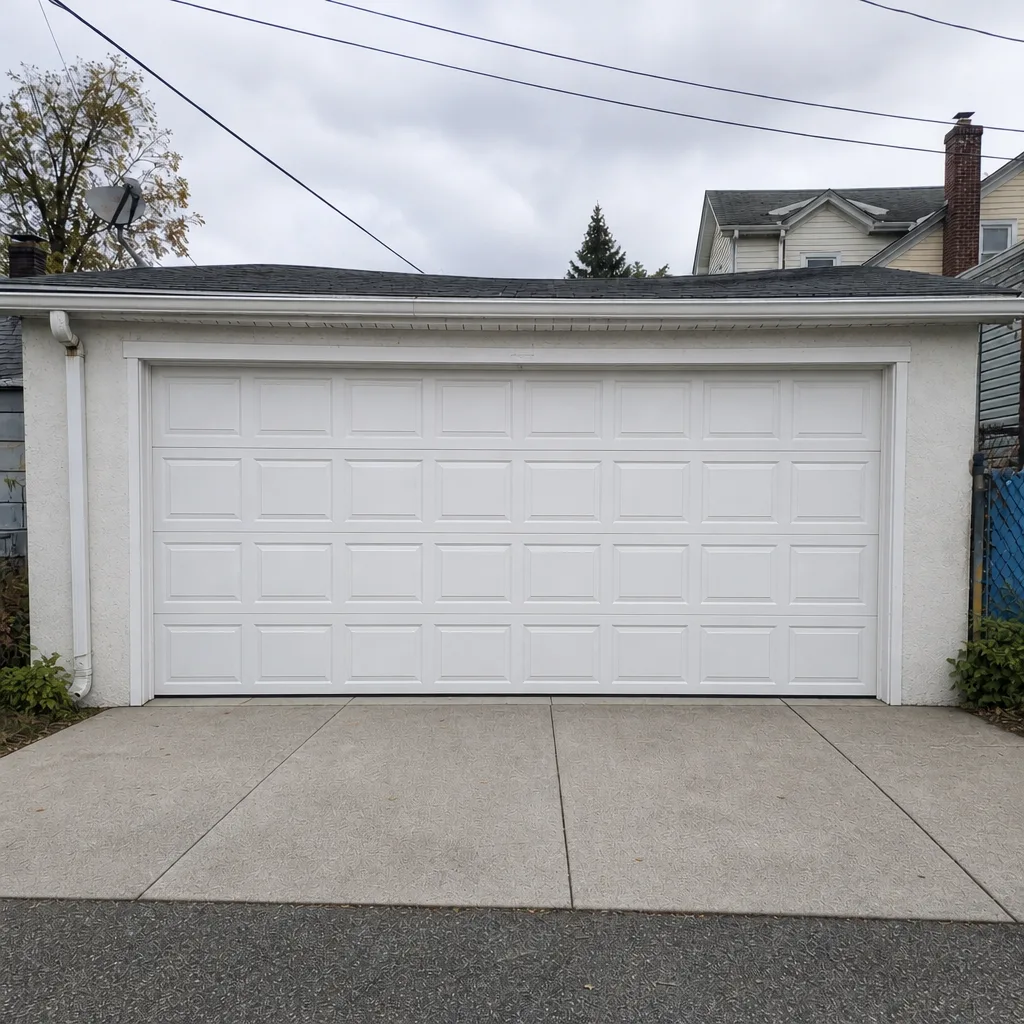 After
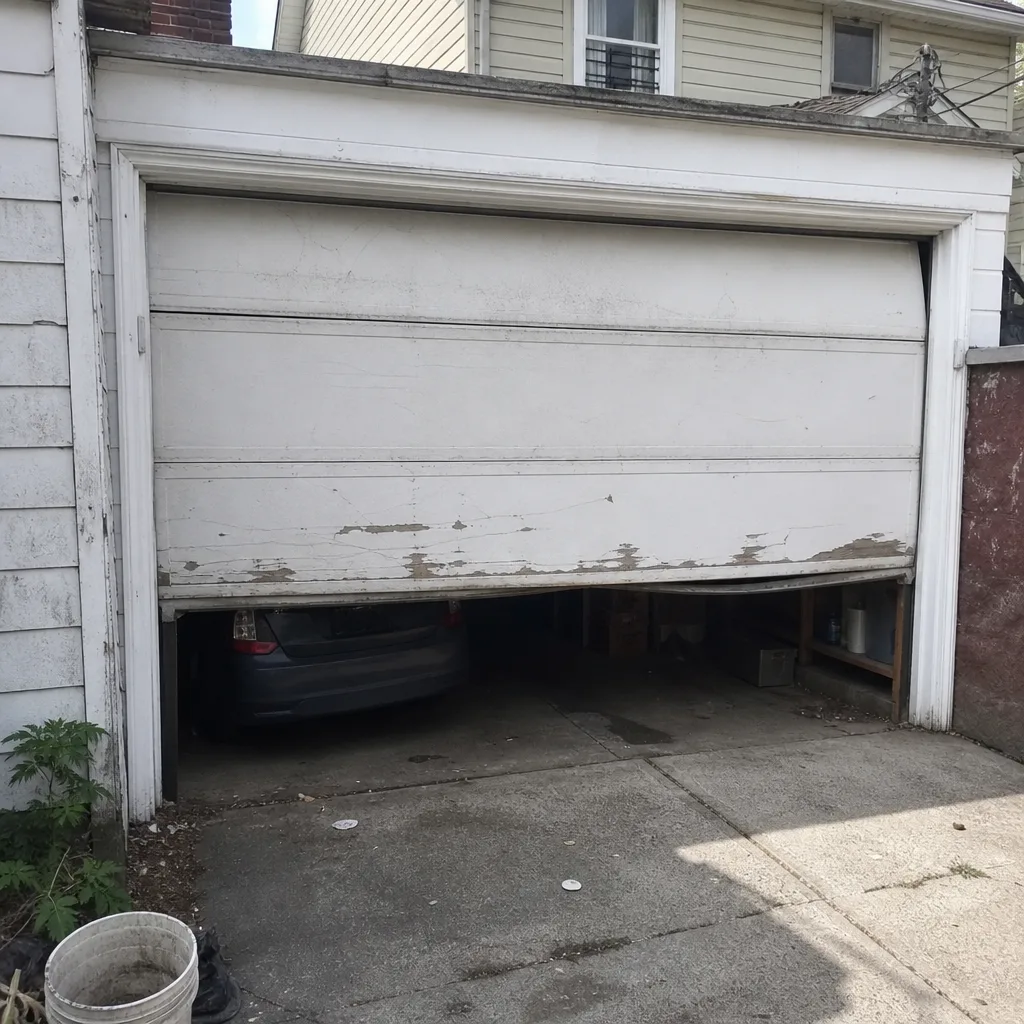 Before
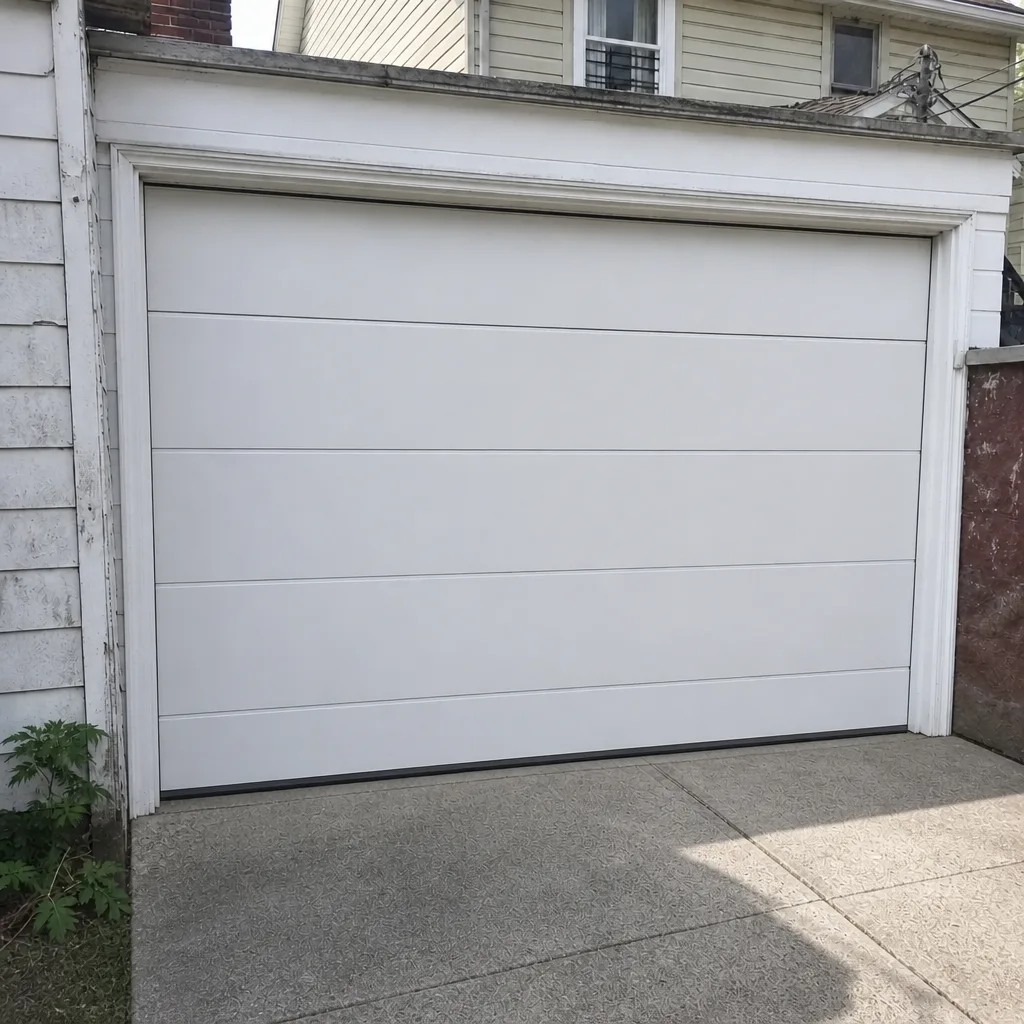 After
Common Mistakes to Avoid
- Bumping up the opener’s force limit to fix a slow door. This masks the real problem and wears out the opener faster. If the door lifts by hand but hesitates on the opener, the fix is balance and settings, not force.
- Treating a broken spring as a home repair. Torsion springs store enough energy to cause serious injury. This is the one warning sign where the correct action is to stop using the door and call a professional, not to research it further.
- Assuming the bottom gap is foundation settling. In most Mott Haven garages, an uneven gap is track alignment. Get it looked at before you spend money on the framing.
- Working on a door that’s been left open through the rain. Water on the track and rollers causes rust that spreads quickly. If the door’s been open overnight in a storm, get it checked.
- Replacing the opener when the door is the problem. A new opener on an unbalanced door will fail the same way the old one did. Fix the door’s balance first, then decide.
- Ignoring a rust line on the spring because the door still works. A spring with a visible dark rust line is on the way out. It can fail at any point, including with the door up and a car underneath.
- Calling a generalist handyman for a spring or cable repair. These are the two highest-risk jobs on a garage door, and they call for trained technicians who work on them regularly.
Frequently Asked Questions
The earliest warning signs are a door that hesitates before moving, a motor that runs before the door does, a new squeal or grind during travel, and any visible rust line on a spring. Catching any of these early usually keeps the repair in the adjustment or maintenance range rather than a full replacement. If the door also hesitates and you’ve noticed a small gap at the bottom, book a diagnostic rather than waiting.
Listen for the point in the cycle when the noise starts. Noise while the motor runs before the door moves points at the opener. Noise during the door’s travel, before the motor engages, points at the springs or cables. A quick balance test – release the door and lift it by hand – confirms it. If the door lifts easily, the opener or its settings are the problem. If it’s hard to lift, the spring is.
Not always. Light orange oxidation across the coil is normal in Bronx humidity. What matters is a dark, pencil-thin rust line or a visible crack, usually near the coil ends or the center. That pattern means the spring is about to fail, and the door should not be used until it’s inspected. Call (877) 931-8297 for a free estimate. We answer 24/7. Fast dispatch from 7am to 7pm, Sunday through Friday.
Usually not. An uneven gap that’s wider on one side points at track alignment. A gap that’s widest in the middle points at a bowed panel. A gap at a single corner combined with a door that racks side to side as it lifts is the case that can point at movement in the old framing around the opening, which is worth a professional look in Mott Haven’s older garages. A technician can tell which you have in a few minutes.
Yes, if the cable is detached or birdcaged. Stop using the door and call. Cables and springs work as a pair, so we recommend having both inspected on the same visit. The price is quoted and agreed before any work starts. Call (877) 931-8297 for an exact quote. Estimates are free.
The local professional we connect you with is licensed and insured as their state requires. Our technicians have up to 13 years of experience with the brands on this page, including LiftMaster, Chamberlain, Genie, Clopay, Amarr, Wayne Dalton, Craftsman, and Raynor. If you have a brand-specific system, mention it when you call so the right technician is sent. Call (877) 931-8297. We answer 24/7. Fast dispatch from 7am to 7pm, Sunday through Friday.
The Bottom Line
Every failure on this list gives you a warning first, and the warnings are readable if you know what to watch for. Hesitation means the opener is compensating for something. A rust line on a spring means failure is close. A bottom gap is usually track, sometimes framing. A door that lifts by hand but not on the opener is a settings problem. Cable fraying has three tiers and the top tier is same-day. Run the monthly check, note anything that changes, and treat spring and cable issues as stop-using-the-door events. If you’re not sure what you’re looking at, that’s the right time to call. A free estimate costs you nothing, and a caught warning costs much less than a snapped spring.
Call (877) 931-8297 for a free estimate on any of the warning signs in this guide. We service LiftMaster, Chamberlain, Genie, Clopay, Amarr, Wayne Dalton, Craftsman, and Raynor, and we cover repair, springs, openers, and full replacement on the same call. We answer 24/7. Fast dispatch from 7am to 7pm, Sunday through Friday. If you’re in Mott Haven and your door is telling you something, we’ll come read it with you.
Written by the team at Garage Door Repair Mott Haven.