
Last updated November 21, 2026
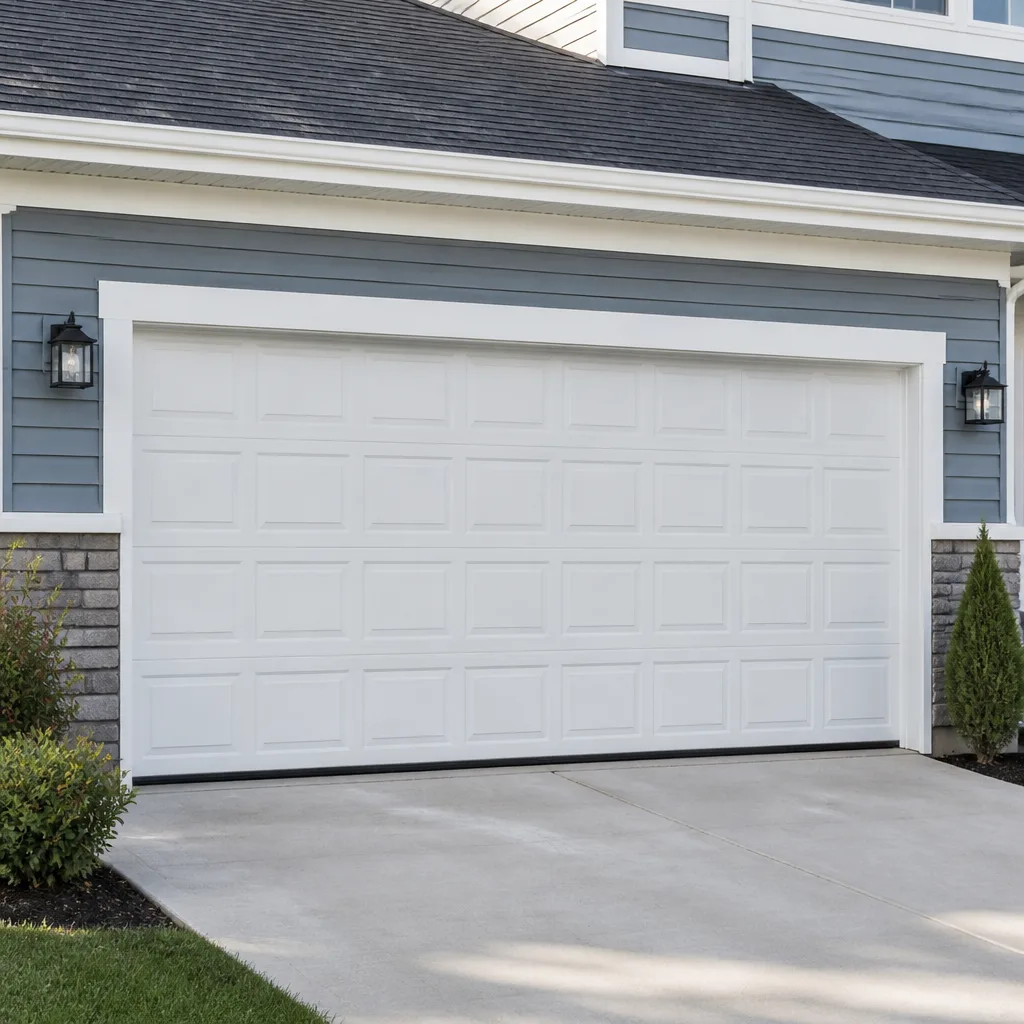 Raised-panel steel
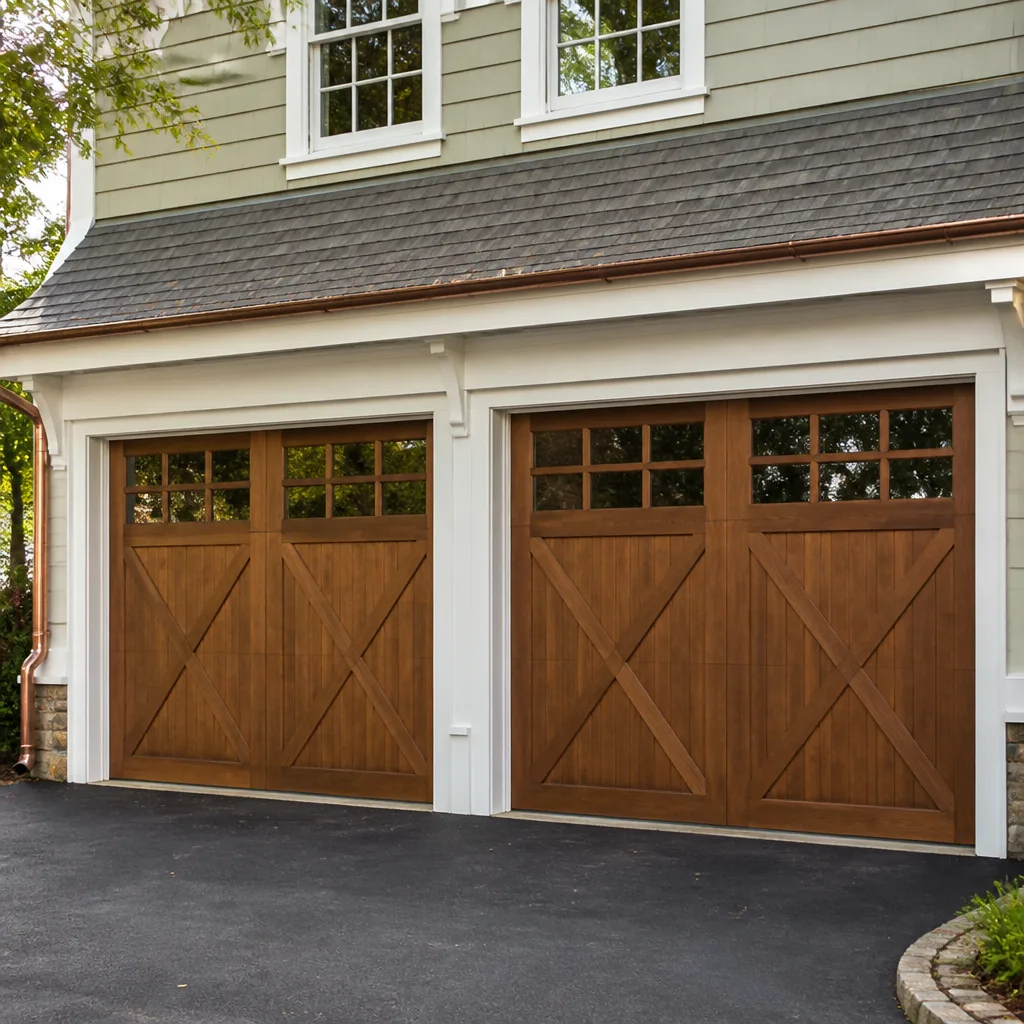 Carriage house
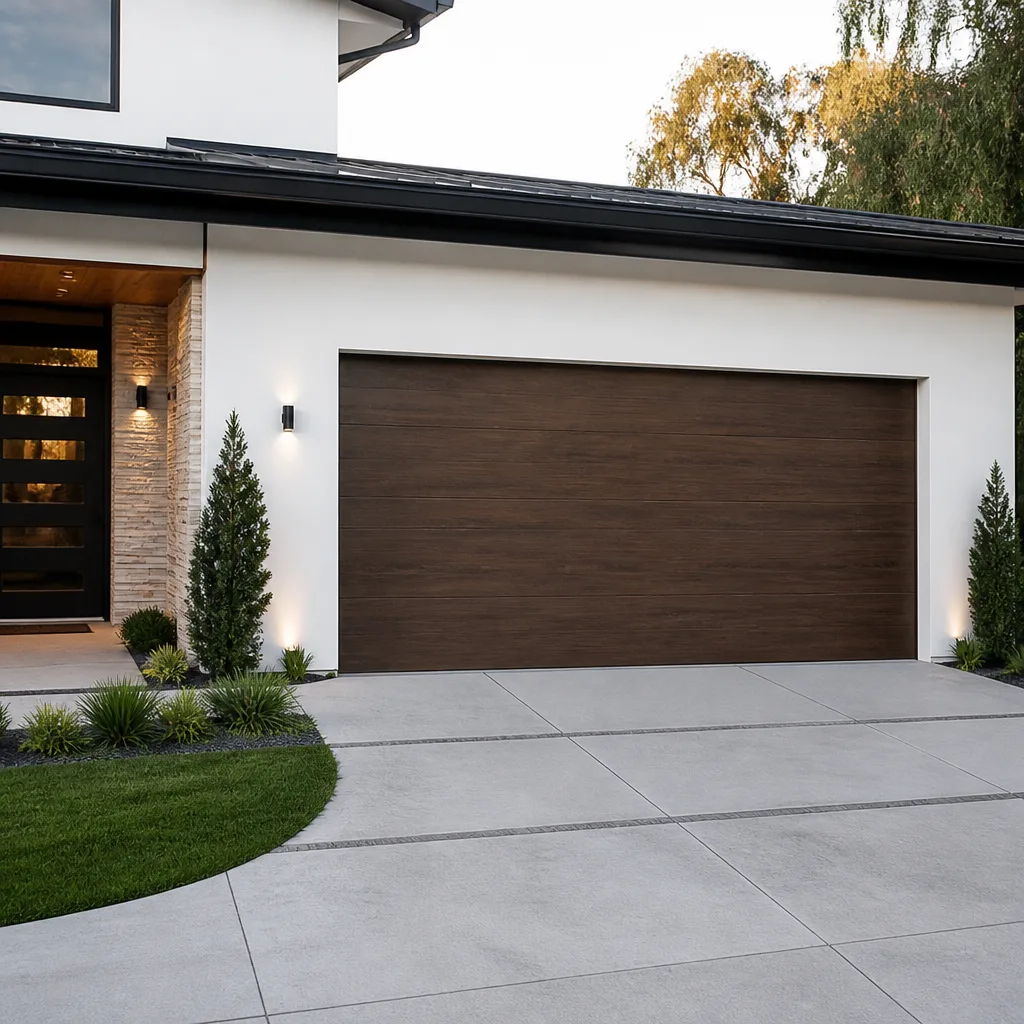 Modern flush
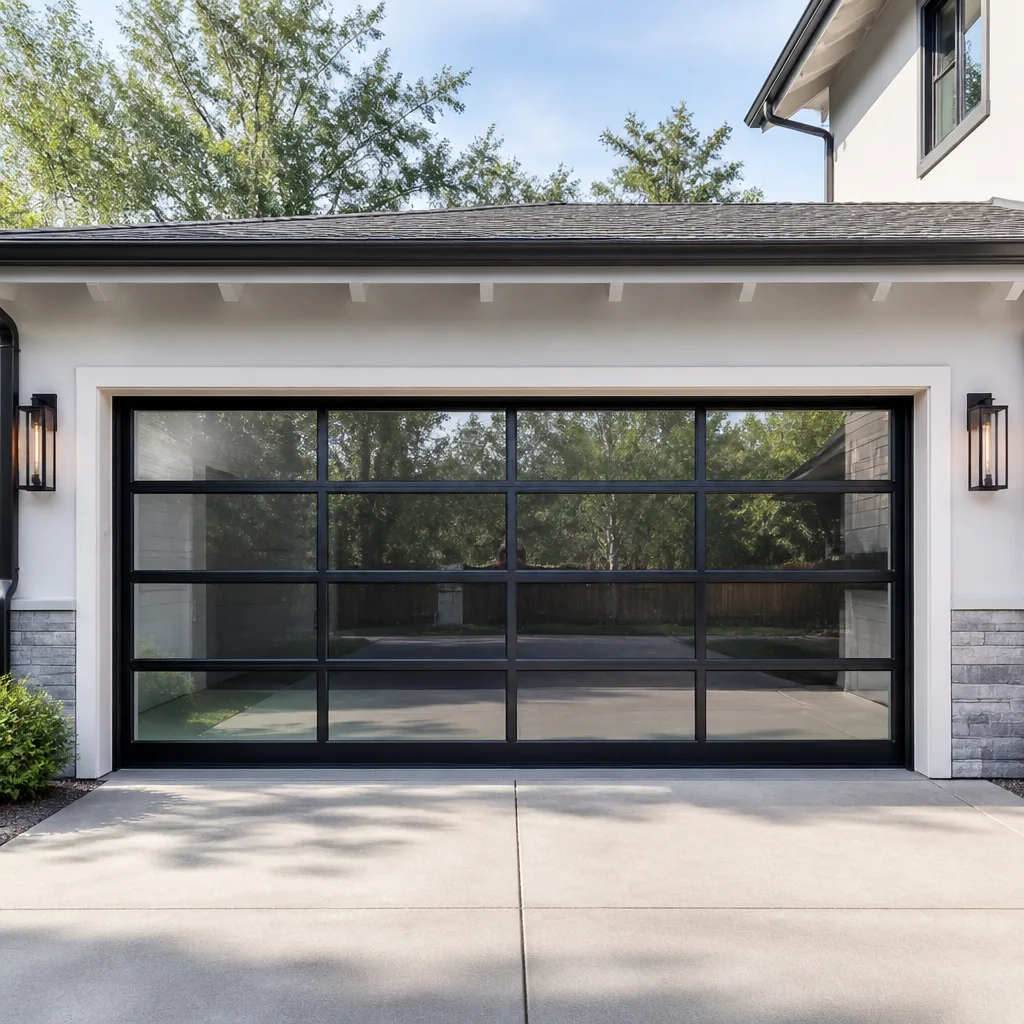 Full-view glass
 LiftMaster openers
 Chamberlain openers
Full 25-point door and opener safety check with every visit - springs, cables, rollers, tracks, and your LiftMaster or Chamberlain opener included
You get a price before we start. It does not change when the pro arrives.
Get your free estimateDIY vs Professional Garage Door: The Mott Haven Homeowner’s Decision Guide
Most advice on this topic picks a side before it looks at the job. Either every garage door task is “leave it to the pros,” or every handy homeowner is told they can handle it with a YouTube video and a Saturday afternoon. Neither is useful, and both can cost you money or put you in the emergency room. The real answer changes component by component: some garage door work in Mott Haven is genuinely homeowner-appropriate, and some of it carries enough stored energy to break bones. A torsion spring under full tension holds roughly 100 foot-pounds of torque. That’s the number that makes experienced general contractors hand off spring work to a specialist, and it’s the line this guide draws. We’ll walk through which tasks you can safely do, which ones need a trained technician, why a Mott Haven alley garage is harder to install a door on than a suburban driveway, and how to read a repair quote so you know what you’re paying for.
Quick Answer
The split is by component, not by confidence. Sensors, lubrication, weather seals, and minor track adjustments are safe for most Mott Haven homeowners to handle. Torsion springs, extension springs, cables, and any structural rehanging of the door or tracks require a trained technician, because those parts store and release enough force to cause serious injury and panel damage when they fail mid-job. Installation in a Mott Haven alley garage is almost always a professional job for clearance and staging reasons alone.
Styles & brands we work with
- Raised-panel steel
- Carriage house
- Modern flush
- Full-view glass
- LiftMaster openers
- Chamberlain openers
Table of Contents
- Component-by-Component: What’s Safe to DIY in Mott Haven
- Why Spring Work Is the Hard Line
- Why Mott Haven Alley Garages Make Installation a Pro Job
- The Real Cost of a Failed DIY Spring Job
- What Tools You Actually Need (and What Retailers Sell You)
- How to Read a Repair Quote and Negotiate It
- Opener Repair: Where DIY Gets Complicated
- The DIY Maintenance Routine That Prevents Most Calls
Component-by-Component: What’s Safe to DIY in Mott Haven
A garage door is a system of parts with very different risk profiles, and treating them as one unit is where homeowners get into trouble. Here’s how we’d draw the line for a typical Mott Haven homeowner working on a typical two-car alley garage.
Safe for most homeowners
- Photo-eye sensors. If your door reverses randomly or won’t close, the safety sensors near the floor are the first thing to check. Confirm the lenses are clean, aligned, and lit solid, not blinking. This is a ten-minute check and solves a surprising share of “my door won’t close” calls.
- Lubrication. A garage-door-specific lubricant applied to hinges, rollers, and the opener rail keeps things quiet and extends roller life. Do not use WD-40 as a substitute; it’s a solvent, not a lubricant, and it will strip the greasier parts.
- Weather seals and bottom rubber. The bottom seal on a Mott Haven door takes a beating from grit and standing water in alley drains. Replacing it is straightforward and cheap.
- Minor track adjustments. A track loose at one bracket can be snugged back into place with a socket wrench. What we don’t recommend is bending a track back into square by hand; that’s a technician task.
- Visual inspection. Look at the springs, cables, rollers, and hinges. If a spring has a visible gap or the door opens crooked, you’ve just discovered a problem before it became an emergency call, and you didn’t have to touch a moving part.
Requires a trained technician
- Torsion and extension springs. Both types store energy that must be safely released before removal. This is the one component we’d stop any homeowner from attempting, no exceptions.
- Cables. Cables hold the door’s weight under tension alongside the springs, and a snapped cable can whip with enough force to sever a hand.
- Track replacement and rehanging. If the door has jumped a track or the brackets have pulled from the wall, the door needs to be structurally rehung, not nudged back into place.
- Panel replacement. Door panels carry weight and interact with the track geometry, so a “simple” panel swap can create misalignment that damages the rest of the door.
- Opener replacement and gear-driven opener repair. On a LiftMaster or Chamberlain unit, most internal repairs sit behind live motor and gear assemblies that a homeowner shouldn’t be opening.
- Full door installation. Even with a second set of hands, installation in a Mott Haven alley is a genuinely different job than the one in the manufacturer’s video.
If you’re not sure which category your problem falls into, the fastest path is garage door repair. We diagnose the component before we quote the job.
Why Spring Work Is the Hard Line
A garage door spring is a storage device. It’s tuned to counterbalance the door’s weight so a child can lift it, and that tuning means the spring is holding far more force than the door itself. A torsion spring under load sits at roughly 100 foot-pounds of torque, and loosening the set screws on a wound spring releases that force through the winding bars, not into a controlled rotation. This is why the trade treats spring failure as a safety issue, not an inconvenience.
What actually goes wrong in a DIY spring attempt
- The homeowner sees a snapped spring, orders the matching size online, and assumes the swap is a matter of pushing a new spring on and tightening the screws.
- The new spring arrives at the wrong wire gauge or length because the door’s weight and drum size weren’t measured, so the door is either too heavy to lift or slams closed.
- The winding attempt gets partway through, the winding bar slips, and the spring releases in the wrong direction. This is the moment the injury happens.
- The door is left halfway, still weighted, and now both the spring and the door geometry need professional correction. The final repair costs more than the original spring job would have.
The right path on a spring failure is straightforward: close the door if it will close safely, don’t run the opener on a door with a broken spring, and call for repair. Spring replacement is a core specialty precisely because it’s the most dangerous component on the door and the one most likely to be handed to whoever answers the phone. If your door didn’t come down cleanly, we also want to look at the cables and drums, since a spring failure often stresses them at the same time.
Why Mott Haven Alley Garages Make Installation a Pro Job
Installation advice online is written for a suburban driveway with a two-car-wide apron, three feet of clearance on each side, and a level approach. A Mott Haven block is not that. The housing stock here is mostly attached, and the garages that exist are packed into alleys off the main streets, with the rear of the buildings close to the property line. If you’re installing a door yourself, the geometry alone changes the risk.
The staging problem
A standard single-car sectional door comes in four to five panels. Each panel is wide, tall enough to be awkward, and heavy enough that a single person can’t steady it and attach hinges at the same time. In an alley with a 90-degree turn or a shared driveway entrance, you also can’t lay panels flat in the staging area the way you would on a driveway. A professional install is a two-technician job for the panel handling alone.
The clearance problem
Mott Haven garages tend to be tighter than the door manufacturer’s minimum specifications for side room and headroom. Torsion springs need room to sit on the shaft above the door; extension springs need room on each side of the track. If the garage is tighter than spec, the door needs a low-headroom or rear-mount setup, which is a different spring system than the door was packed with. Installing a standard door in a tight Mott Haven garage without checking clearance first leads to a door that won’t open the full travel, binds on the ceiling, or trips the opener’s force setting on every cycle.
The permit problem
Most cities require a permit for garage door replacement work that changes the opening or involves structural attachment, and New York is no different. Whether your specific job needs one is a question for your city’s building department; ask before work starts, not after. This is also the point where a professional quote includes the planning for the actual opening rather than assuming the door you bought fits.
If you’re evaluating replacement rather than repair, our garage door installation page covers what a measurement visit looks like and what a written install quote includes.
The Real Cost of a Failed DIY Spring Job
We don’t quote hypothetical losses here. What we can tell you is that the arithmetic on a DIY spring attempt rarely favors the homeowner, even before the injury side of it. The costs come in three places.
- The injury cost. A spring-related emergency room visit is a real number for anyone who doesn’t have a low deductible. Even a minor laceration, a broken finger, or a back injury from catching a falling door can cost far more than a professional spring replacement, and that’s before lost work time.
- The panel and hardware damage. When a spring releases or a door falls, the panel closest to the bottom usually takes the impact. A cracked or dented panel plus the bent hinges and roller damage from the fall routinely costs several times the original spring price to fix. A mis-tensioned replacement spring can also wear the opener’s gear assembly, turning a spring job into an opener replacement.
- The re-service call. When a homeowner gets partway through a DIY spring job, we get called to a door that’s still under load and now in an awkward position. The technician has to safely release the half-installed spring, inspect the door for bent parts, then do the original replacement. That’s a longer job than the one that was called in originally, so the price is higher than it would have been on day one.
If you’ve already started a spring job and stopped because something didn’t feel right, don’t run the opener and don’t try to force the door down. Call instead. We answer 24/7 and can talk you through making the door safe to leave until a technician arrives.
What Tools You Actually Need (and What Retailers Sell You)
Online retailers have figured out that “garage door repair kit” is a searchable term, and they’ve built products around it. Most of what’s in those kits you either already have in a standard toolbox or will never use. Here’s the honest split.
Tools worth having on hand
- A socket wrench set with the standard sizes for your door’s hinges and brackets.
- A flathead and Phillips screwdriver set.
- Garage-door-specific lubricant (silicone-based or lithium grease, depending on the manufacturer).
- A level, for checking track alignment.
- A stiff brush for cleaning the bottom seal channel and the track.
- A step ladder rated for your weight, since you’ll be reaching the opener and upper hinges.
Tools you don’t need to buy for DIY maintenance
Winding bars are in every “DIY spring kit” listing, and they’re exactly the tool that shouldn’t be in a homeowner’s kit. Winding bars exist because a technician uses them to safely release and set spring tension; buying them implies the homeowner is going to use them. If the kit you’re looking at includes winding bars, it’s not a maintenance kit. Specialized spring scales, cable-clamping pliers for high-tension cable work, and torque-specific drum tools are all professional tools that belong in a technician’s van, not a homeowner’s garage.
A homeowner’s real tool budget for safe DIY maintenance is under a hundred dollars. That’s the socket set you probably have, a can of the right lubricant, and a level. Everything above that is where the value of a professional visit starts to make more sense than the tool cost.
How to Read a Repair Quote and Negotiate It
The best defense against paying professional prices for a task you could have done yourself is knowing what the job actually involves. When a quote arrives, read it in three parts: the diagnosis, the parts, and the labor scope. Each tells you something different.
What a good quote looks like
- The stated problem. A quote should name the failed component, not just “garage door repair.” If the answer is “your spring needs replacing,” you should be able to see the spring the technician is talking about, with a visible break or loss of tension.
- The part specification. Spring quotes should specify whether the price is for one spring or a matched pair. Replacement is usually a pair job because both springs have cycled the same number of times, but the price for one spring is roughly half of the price for a pair. If the quote doesn’t say which, ask.
- The labor scope. A spring replacement should include re-balancing the door and testing the opener’s force and travel settings. A quote that lists spring replacement without re-balancing is quoting half a job.
- Whether the price is per job or by the hour. Per-job pricing is the standard, and it’s a better deal for the homeowner because it shifts the risk of a longer-than-expected job to the technician. Ask which model the quote is using.
How to spot the upsell
If a quote includes “adjustment of sensors” or “lubrication of moving parts” as a separate line item on top of the actual repair, ask whether those tasks are part of the repair visit. They should be. If a spring failure quote also includes cable and drum replacement without the technician showing you damage to those parts, ask why. Sensible technicians will replace a cable that shows wear next to a broken spring because they’re already on the door. They won’t replace a cable that’s in good shape just to raise the ticket.
And the reverse applies: if you’ve been quoted for a “full door service” and the scope is all sensor checks and lubrication, you can do that yourself with the tools above. The DIY tasks are genuinely DIY.
Opener Repair: Where DIY Gets Complicated
Opener work splits in a less obvious way than the door itself. Some troubleshooting is a homeowner task; most internal repair isn’t. LiftMaster and Chamberlain (the myQ ecosystem) cover most of the modern smart openers in Mott Haven homes, and the older stock here tends to run Genie or Craftsman. Each has its own failure modes.
Safe opener troubleshooting
- Resetting the wall unit or the opener head to clear a fault code.
- Re-pairing a remote or a Wi-Fi connection on a LiftMaster or Chamberlain unit.
- Replacing the battery in a remote or the wall button.
- Checking that the photo-eye sensors are aligned and clean.
- Confirming the manual release works and the door is balanced when disconnected from the opener.
Professional-only opener repair
- Replacing a stripped gear assembly, which most opener models bury behind the motor housing.
- Replacing the logic board or the capacitor.
- Replacing the opener entirely when the motor is failing.
- Adjusting the force and travel limits on a door that isn’t balanced. This is the setting that stops the opener from pressing a jammed door through the frame, and a bad setting will burn out the opener’s motor over time.
If your opener is failing to lift a door that’s become heavy or crooked, the problem may not be the opener at all. A door that’s out of balance, from a worn spring or a bent track, will look like an opener failure until you disconnect the door and try to lift it by hand. Our garage door opener repair service will diagnose the door before recommending opener work, because replacing a working opener won’t fix an unbalanced door.
The DIY Maintenance Routine That Prevents Most Calls
The best way to avoid both a professional repair bill and a risky DIY job is to keep the door in working condition in the first place. A fifteen-minute routine twice a year catches most of what fails.
- Test the auto-reverse. Place a two-by-four flat on the ground under the door and close it. The door should reverse on contact. If it doesn’t, the opener’s force setting is wrong, which is a professional adjustment.
- Test the photo-eye sensors. Wave an object through the beam while the door is closing. It should reverse. Wipe the lenses and check the alignment if it doesn’t.
- Listen and look. A squeaking hinge or a wobbling roller is visible and audible. Worn rollers cost very little to replace and cause far more expensive damage if left alone.
- Disconnect and balance-test. Pull the manual release and lift the door halfway. It should stay where you leave it. If it drifts down or needs a real shove to lift, the spring tension is off, and that’s a call to a technician, not a DIY adjustment.
- Check the hardware. Loose bolts on hinges and brackets can be snugged with a socket wrench. If the brackets are pulling away from the wall, stop and call. That’s structural.
- Lubricate. Hinges, rollers, and the opener rail, with the correct product.
- Seal the bottom. Look at the bottom rubber in Mott Haven’s wet months, when grit and standing water in alley drains put wear on the seal faster than dry weather does. Replace it when it’s cracked.
A door that passes this check twice a year is a door that will still be balanced and safe when a spring eventually does fail. A door that hasn’t been checked since it went in is a door where a small problem turns into an emergency.
Common Mistakes to Avoid
- Ordering a replacement spring before measuring. Doors are specified by wire gauge, inside diameter, and length, and a wrong-gauge spring will either leave the door too heavy to lift or slam it closed. Ordering by eye is the most common DIY mistake we see on spring jobs.
- Running the opener on an unbalanced door. This is how a cheap spring problem turns into an opener replacement. The motor is fighting the door’s weight and the gear assembly wears out fast.
- Bending a bent track back into shape by hand. Track bends usually mean the door has jumped or the brackets have shifted. Bending the track makes the door’s travel worse, not better, and it can pinch the rollers.
- Ignoring the second spring. Springs are cycled together, so if one has failed, the other is on the same clock. Replacing one spring and leaving the other is a false economy in a Mott Haven door that gets opened multiple times a day.
- Trying to install a door solo in an alley garage. Even if you can physically move a panel, you can’t steady it, align the hinges, and attach the track at the same time. A dropped panel is a replacement, not a repair.
- Buying a “DIY spring kit” without checking whether it’s for a torsion or extension door. The two systems use completely different parts, and most kits are sold for one specific setup.
- Skipping the permit question on a replacement. Call your city’s building department before work starts and ask whether your job requires one. Retroactive permitting is a headache you don’t need.
See the difference
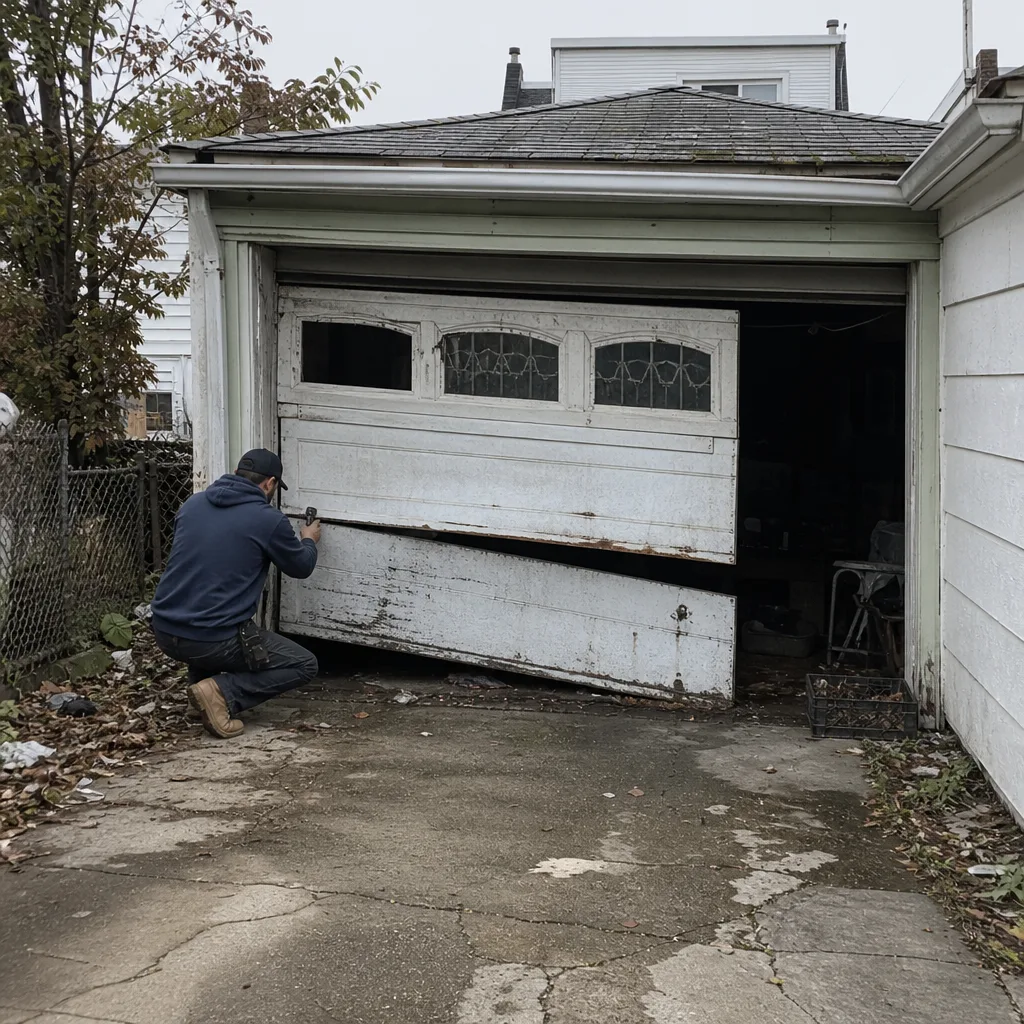 Before
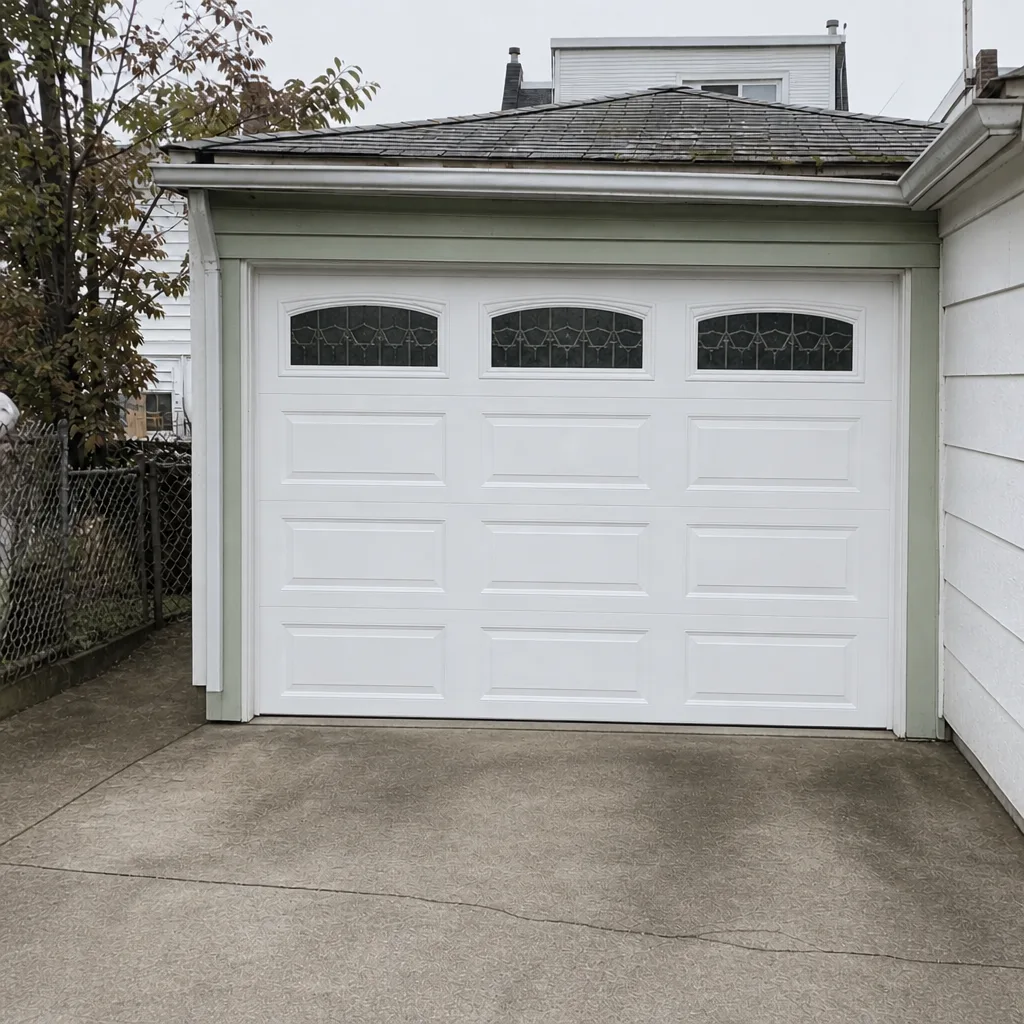 After
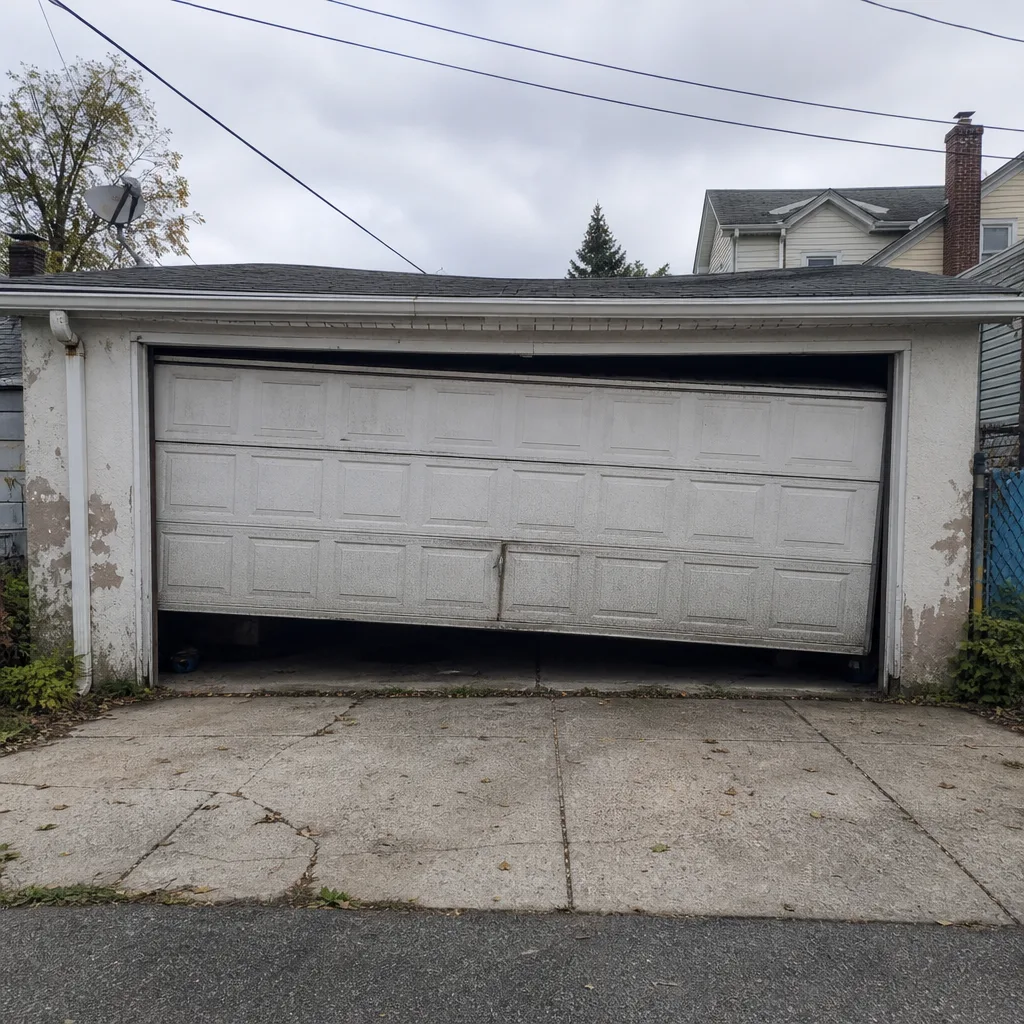 Before
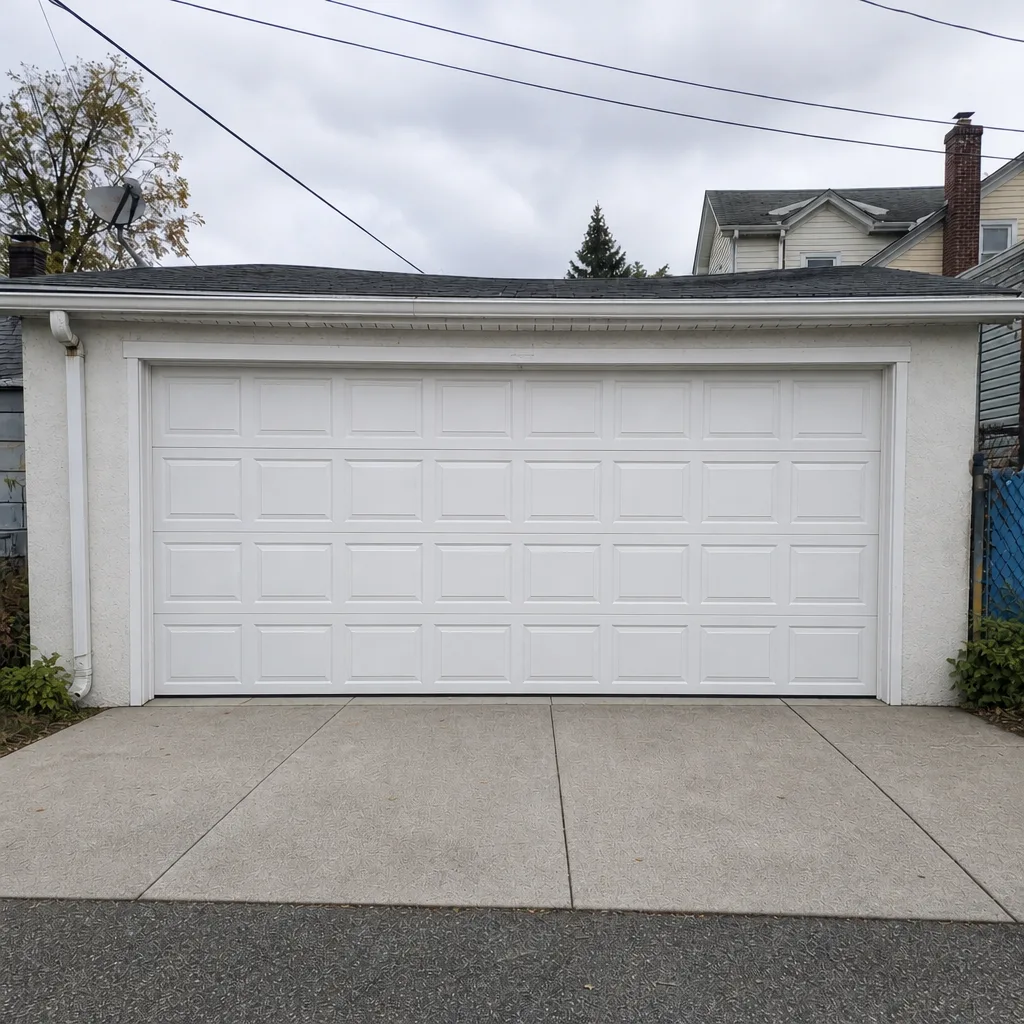 After
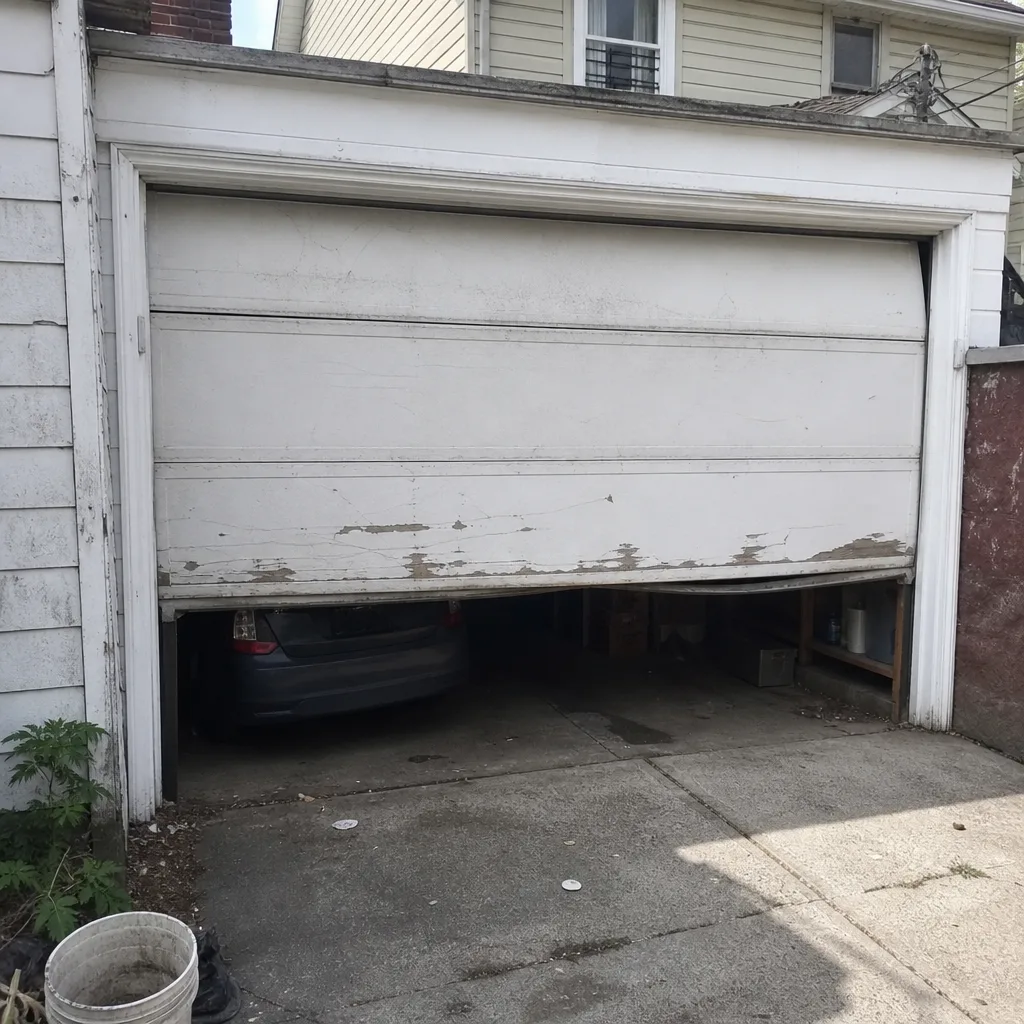 Before
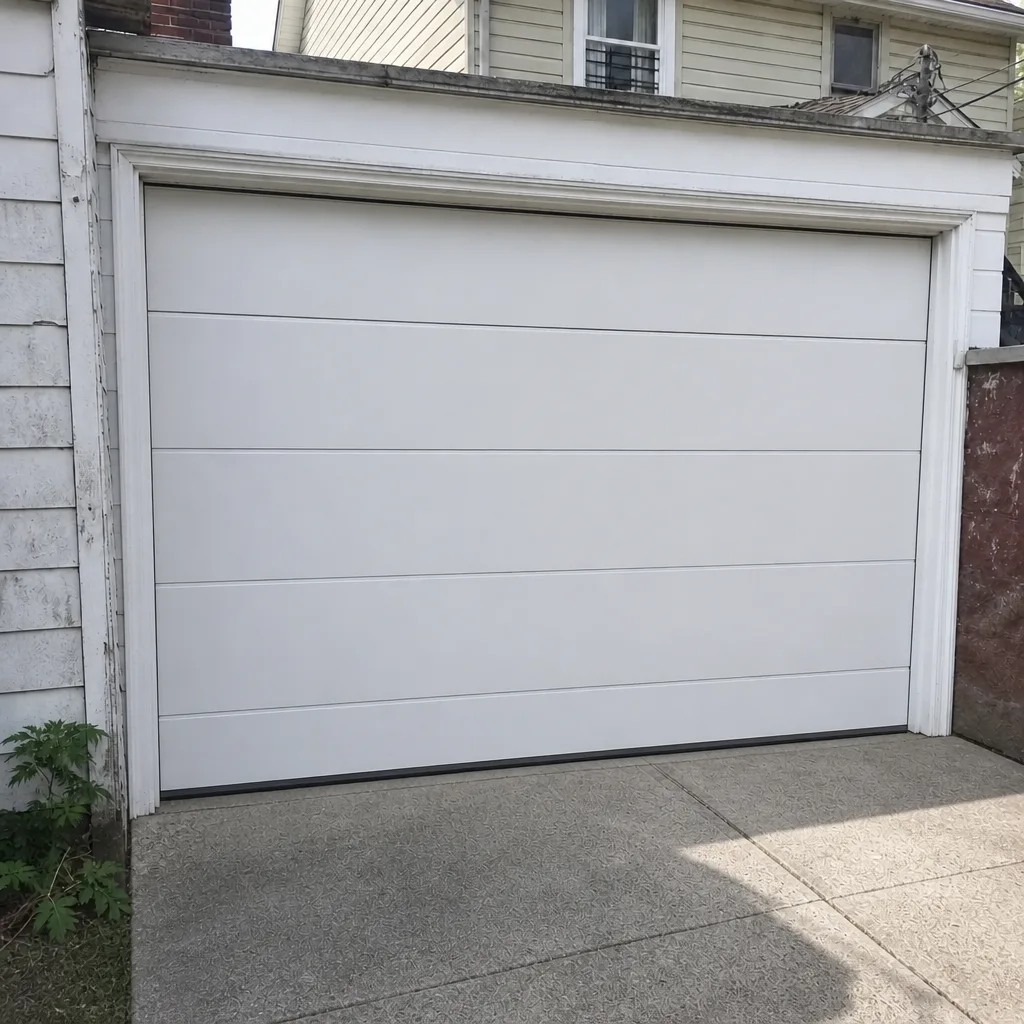 After
When to Call a Professional
Call a professional when the repair touches springs, cables, the structural mounting of the door or tracks, the internal assembly of the opener, or any full-panel replacement that affects the door’s alignment. Call when you’ve started a DIY job and stopped because something doesn’t feel right, especially on a spring. Call when the door is crooked, won’t close all the way, or the opener is grinding. And call when you want a diagnosis you can trust before you decide between repair and replacement.
Garage Door Repair Mott Haven offers free estimates in Mott Haven. Call (877) 931-8297. We answer 24/7 and dispatch a technician from 7am to 7pm, Sunday through Friday. Our technicians have up to 13 years of experience and work on the brand you already have, whether that’s a LiftMaster opener, a Chamberlain myQ unit, a Genie, or a Raynor door.
Frequently Asked Questions
Sensor alignment and cleaning, lubrication, weather seal and bottom rubber replacement, and snugging up a loose hinge or bracket are all safe for most homeowners. Anything that involves a spring, a cable, or bending a track back into shape is a professional job. The dividing line is stored energy: parts that hold force are technician work.
On paper, a homeowner can buy a spring online for far less than a professional replacement, but the comparison doesn’t hold on its own. Most DIY spring attempts that fail end with a panel replacement, bent hardware, or an opener repair call on top of the original spring job, before any injury cost. Call (877) 931-8297 for an exact quote on a professional spring replacement, and the written estimate sets the final price. Estimates are free.
Staging space and clearance. Alley garages in Mott Haven often have shorter aprons and tighter side room than a suburban driveway, so panels can’t be laid flat on the ground during assembly, and the garage itself may be tighter than the door’s minimum headroom and side room specifications. That means a low-headroom or rear-mount spring system, which changes the install. A two-technician measurement visit resolves both issues before the door is ordered.
Yes, when it’s a written estimate for the diagnosed problem. A phone quote for a spring replacement is really a range until a technician has seen the door, confirmed the spring size, and confirmed the door’s balance. Once the written estimate is agreed, that’s the price for that scope. If the technician finds an additional problem during the visit, they’ll show you and re-quote before any extra work starts, not after.
Basic setup like re-pairing a remote or resetting a liftmaster or chamberlain unit is fine, but internal repair and new opener installation are best left to a technician. New installations involve wiring to the ceiling, setting force and travel limits correctly, and the door balance check that most homeowners don’t think to do. If your door becomes heavy or crooked, that’s a door balance problem, not an opener problem, and the technician needs to look at both.
Yes, across LiftMaster, Chamberlain, Genie, Clopay, Amarr, Wayne Dalton, Craftsman, and Raynor. That matters for DIY decisions because brand-specific systems have brand-specific failure modes, and a technician who knows your Genie or your Chamberlain myQ unit will diagnose the actual problem faster than a generalist. Call (877) 931-8297 for a free estimate.
The Bottom Line
The DIY vs. professional question for a garage door isn’t about whether you’re handy. It’s about which components carry stored energy and which don’t. Sensors, lubrication, seals, and minor hardware tightening are yours to handle, and it’s a good use of your time. Springs, cables, structural rehanging, panel replacement, and internal opener repair belong to a trained technician, in Mott Haven as much as anywhere. Alley garage installs add their own layer of risk that no video prepares you for. Read your quote in parts, ask whether spring pricing is for one or a pair, confirm the final price before work starts, and you’ll get the right work done at the right price. When you need a diagnosis you can trust, garage door repair Mott Haven is the call we’d make.
Get a Free Estimate
If you’re past the DIY line and want a real diagnosis before you spend, call Garage Door Repair Mott Haven at (877) 931-8297. We answer 24/7, and we dispatch a technician from 7am to 7pm, Sunday through Friday. Estimates are free, the written estimate sets the final price before any work begins, and our technicians are equipped to handle spring repair, opener repair, and full installation under one call. Whether you’re in Mott Haven or want a second opinion on a quote you’ve already gotten, we’ll tell you what the job actually needs.
Written by the team at Garage Door Repair Mott Haven.